Monday, July 14, 2014

Monday Morning Quarterback #19 Doug Williams 1989 Score


In this ongoing series of posts I am going to feature cards from my fantasy football player collection, specifically the 117 quarterbacks I've had on my team's roster since 1980. I have one selected card for each player in my All-Time Flyers binder. Through the years I've tried to use as many different card varieties as possible while holding on to my preference which is: a card issued in a year I owned the player showing him in the proper team uni in a vertical format. Card availability and my whims have had a big impact on that standard as we will see. 
NFL Info: Doug Williams only played one season at Grambling State University but he finished 4th in the Heisman voting and was drafted by the Tampa Bay Bucs in the first round of the 1978 draft with the 17th pick. In four seasons with the Bucs he led them to three playoff appearances and one NFC title game. The Bucs had never been to the playoffs before Williams arrived. With him they went to the playoffs three times in four years and the 1979 NFC Championship Game. Williams was the lowest paid starting QB in the league (and was paid less that nearly half the NFL's back-ups) and when he was refused a raise he jumped to the USFL for two seasons before returning to the NFL with Washington.

He was signed by Washington coach Joe Gibbs who had been the Bucs offensive coordinator during Williams' time there. He spent 1986 on the bench but stepped in for Doug Schroeder in 1987 and was chosen to start as the Redskins made the playoffs. He took the team to the Super Bowl and threw for 340 yards and four touchdowns against the Broncos in an MVP effort. He was the first black QB to play in a Super Bowl. Injuries hampered him the next two seasons and he was out of the NFL as an active player after that.

Since the he has been involved in the game as a coach at the high school level in Louisianna, as a college head coach at Morehouse State and Grambling and in various capacities in the NFL. This spring he was hired as a personnel executive under general manager Bruce Allen in Washington.

Fantasy Impact: I had Williams on my bench during the 1982 season which a player lockout/strike shortened to eight fantasy weeks. Tommy Kramer started all of my games including the championship game which I lost.

I had him again in 1988 coming off his big season in Washington. He opened the season as my starter but, just as in the NFL, his season produced mixed results. In six starts he had three two touchdown games but in his other three he didn't throw one. I went back to him in the semifinals and he got a score but I lost anyway.

The Card: 1989 Score football is an awesome set. One of my favorite 'modern' football sets. I bought quite a few packs of this one when it was released but a lot of places that carried cards by the pack didn't have it. Pro Set was more available (at least where I looked) and I put that set together. I continued to buy Score football (I have the complete '90 and '91 sets) but my days of buying a lot of hobby packs ended about 1992.

This Score Williams is pretty typical of the set. The blue border is my favorite of the three colors used. Score was never shy about bright and loud designs back then. The pictures were just a bit below the quality of the Pro Set cards but still pretty nice. The Score logo stays out of the way and of course I appreciate the team helmet being used. Different pic on the back and more color, lots more color!

If I have a gripe it's that the picture on the reverse leaves little room for stats and the write-up which is printed in the smallest possible type size.


Sunday, July 13, 2014

Junk Wax Jim Palmer cards, and a few others

I'm heading up to the Dallas area today for a teachers convention. I may or may not make it over to Arlington for today's game there but just thinking about Arlington brought back memories of seeing the Orioles play the Rangers there.


I usually traveled up there from Houston with a guy named John who I met through the hobby. We both were devoted to the Orioles and we both spent most of our free time at two of the LCSs in southwest Houston. The wonderful mother of one of the store owners called us 'Bob Oriole' and 'John Oriole'. I sometimes thought that she actually believed those were our names. We became good friends, went to all the card shows we could get to and helped each other out with our hobby wantlists. John passed away two years ago and although I hadn't seen much of him in the last several years, I miss going to card shows and talking trash about the dealers. John was quite a character.

Anyway we had a running joke between us that was based on the fact that whenever we made a trip to Arlington we almost always missed Jim Palmer's turn in the rotation. It was uncanny. If we were going up on a Saturday for a weekend series Palmer would have pitched on Friday and we'd miss him. Heading up for a Tuesday night? Palmer was scheduled on Wednesday. We eventually got to see him pitch once in the early 80s and I remember that he pitched on a dreadfully hot weekend afternoon and the Orioles rolled.

In honor of Big John Oriole I'm going to post some junk wax era Palmer cards, and maybe some nicer vintage ones. The two at the top are probably the epitome of 'junk wax'. In 1981 Donruss decided that two cards of Jim Palmer were better than one. But rather than use two different photos they just used the same one twice but cropped it differently. They did have two different backs. The #353 contained personal data, career highlights and the two lines of stats that Donruss used for '81, the prior season and career totals. The #473 card (the closer cropped one) could be viewed as a 'special' as it has a write-up on Palmer's work in the 1970s and a three column comparison of him, Tom Seaver and Jim Hunter.

Donruss' 1981 set was laughable. Terrible color, thin cardboard, and lots of errors... but maybe that's what holds it's charm. When the 'Card Wars' broke out and Topps faced competition from Fleer and Donruss the game changed for collectors.

Here is the '82 Donruss. The back, which I didn't scan, is easier to read and has more extensive stats although the veteran players didn't have complete career numbers listed. Palmer for example, has stats from 1977 on.

Now the 1981 and 1982 Fleer Palmers.


And finishing up here are some random Topps Jim Palmer cards from my Oriole star binder:

1970 #449


The classy and fun 1972 #270


The 1978 and 1979 Jim Palmer All Star cards:


And finally the 1982 Palmer In Action and his regular card, a sweaty face portrait. I like the In Action card a lot more.


Saturday, July 12, 2014

Lets Play Two


This Ernie Banks card was part of a Wrigley Field giveaway promotion the Cubs held last season. According to the card back they gave away 82 cards in sets of about 20 each on different days. 

This Banks of course is done in the Topps '54 style. I think they did a pretty nice job with it. Of course Ernie's rookie card is in the actual '54 set. I'd sure like to have one of those. Who wouldn't?


We've been to Chicago several times since my daughter lives there. We've seen a Cubs game at Wrigley and a Blackhawks game at the Madhouse on Madison but never been inside Soldier Field which I think would be a great experience. We always seem to miss out on White Sox home games. One of those will be arranged on our next trip north.

Friday, July 11, 2014

1962 (and 1961) Topps Stamps


Nothing here is a new pick-up for me. In fact I've posted some of these before but I came across several panels of the '62 Topps Stamps 'hiding' in an envelope while I was searching for something else.

The stamps Topps included in their 1961 card packs were the first inserts I ever saw. I collected cards by the pack in 1960 but I don't think there were any 'bonuses' involved. Besides, most of the cards I bought in 1960 came from cello packs.

The ones issued in 1962 were a lot more colorful to be sure.


But the from 1961 are my favorites. I honestly don't recall anything about the '62s but I can remember putting the '61s in the album and showing them off on the bus on the way home from school.

I keep reading that the '61 stamps are coded by league and that's jut the case. Both AL an NL players can be found among the green and brown tints. Al Kaline's stamp was issued in both tints.


I've thought about putting the '61 set together and the cost wouldn't be very high but I just don't think I want to tackle another insert issue right now. I've bid on several of the albums, both empty and partly full of stamps through the years but my 'willing to pay' has never been high enough to grab one. Which may all be for the best.


Thursday, July 10, 2014

The Odd Couple


A week or two ago Fuji had a post on his blog that featured some recent card show pick-ups, one of which was a Masanori Murakami statue. That post shook loose a memory for me and prompted me to dig out a card I've been wanting to post about but never had the initiative to go find in my boxes of 'stuff'.

Growing up my best friend Chris was a diehard Giants fan and by extension I knew a lot about the team. I wouldn't call myself a Giants fan exactly but it's like living in Houston now... I pick up a lot of Astros info just by being around my family who watch them pretty closely. We'd go to lots of Giants-Mets games at Shea so I more or less 'followed' the club. I even had two favorites, Jim Ray Hart and Juan Marichal.

Murakami's debut as the first Japanese player in the majors caused quite a stir in September of 1964. We developed a real fascination with the guy. I had this card when the '65 set was new but like most of my cards it disappeared along the way. So a few years ago I grabbed another one.

I never gave much thought to Dick Estelle who shared this card with Murakami. Both pitchers were September call-ups in 1964. Murakami debuted on September 1st, Estelle first pitched three days later in Philadelphia on the same Giants' road trip. Murakami pitched one inning against the Mets and allowed a single while fanning two while Estelle's first game was a start and he went six innings against the Phils giving up a run on four hits. He walked five which may have been a case of nerves. Estelle was a New Jersey native from down the Shore so it's possible (probable) he had family on hand for his first game.

Estelle finished out '64 with five more starts and had an ERA of 3.02 and a 1-2 record. He actually was rolling along nicely but was beaten up by the Cubs in his final appearance of the year. He didn't make the Giants' staff in '65 but again was called up in September. This time he worked a few times as a middle reliever, again pitching well and got got a start on the last day of the season. Like the previous year his last weekend on the season work was underwhelming and he was beaten soundly by the Reds.

Estelle, who had been 23 with five seasons of minor league ball behind him when he debuted, never pitched in the majors again. He spent seven more seasons in the minors before retiring.

Like Estelle, Murakami pitched again in 1965 for San Francisco but he had made the club in the spring and was up for the whole season. In 45 games he pitched nearly 75 innings and had a 4-1 record with eight saves. He made one start along the way and the result showed the Giants that they were right in using him as a reliever. He returned to Japan in 1966 and pitched through the early 1980s.

There is much more to Murakami's background including the fascinating story of how he came to pitch in the States, why he returned to Japan and the politics of it all. His story is an interesting one and his BR Bullpen page is a good place to read about him.


Wednesday, July 9, 2014

The Final Four

Arriving in one package over the holiday weekend were the flast four '68 Game cards I needed to complete the set. 

Blue-eyed Baltimore native Al Kaline leads off. One of the quietest superstars ever. Mr. Tiger. If I had to choose my father's favorite non-Yankee player, Kaline would probably be the guy. 


Notable Achievements from Baseball Reference for Al Kaline:

  • 15-time AL All-Star (1955-1967, 1971 & 1974)
  • 10-time Gold Glove Winner (1957/ML-RF, 1958/AL-RF, 1959/AL-CF & 1961-1967/AL-OF)
  • AL Batting Average Leader (1955)
  • AL Slugging Percentage Leader (1959)
  • AL OPS Leader (1959)
  • AL Hits Leader (1955)
  • AL Total Bases Leader (1955)
  • AL Doubles Leader (1961)
  • 20-Home Run Seasons: 9 (1955-1957, 1959, 1962, 1963, 1966, 1967 & 1969)
  • 100 RBI Seasons: 3 (1955, 1956 & 1963)
  • 100 Runs Scored Seasons: 2 (1955 & 1961)
  • 200 Hits Seasons: 1 (1955)
  • Won a World Series with the Detroit Tigers in 1968
  • Baseball Hall of Fame: Class of 1980
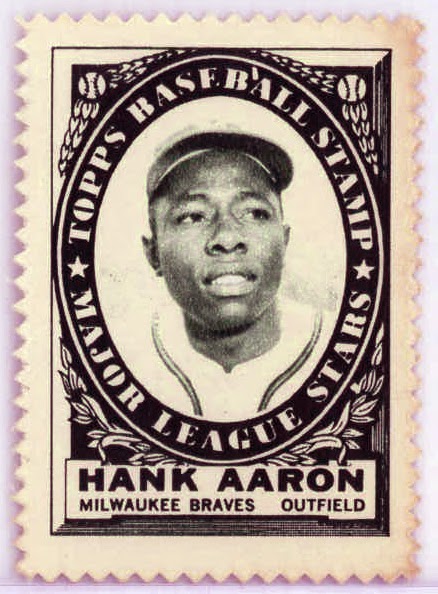
The Hammer, Hank Aaron. Some folks still consider him the home run champ. I'll stay far away from that argument. 


Notable Achievements from Baseball Reference for Hank Aaron:


  • 1953 MVP South Atlantic League Jacksonville Tars
  • 24-time All-Star (1955-1975)
  • NL MVP (1957)
  • 3-time NL Gold Glove Winner (1958-1960/RF)
  • 2-time NL Batting Average Leader (1956 & 1959)
  • 4-time NL Slugging Percentage Leader (1959, 1963, 1967 & 1971)
  • 3-time NL OPS Leader (1959, 1963 & 1971)
  • 3-time NL Runs Scored Leader (1957, 1963 & 1967)
  • 2-time NL Hits Leader (1956 & 1959)
  • 8-time NL Total Bases Leader (1956, 1957, 1959-1961, 1963, 1967 & 1969)
  • 4-time NL Doubles Leader (1955, 1956, 1961 & 1965)
  • 4-time NL Home Runs Leader (1957, 1963, 1966 & 1967)
  • 4-time NL RBI Leader (1957, 1960, 1963 & 1966)
  • 20-Home Run Seasons: 20 (1955-1974)
  • 30-Home Run Seasons: 15 (1957-1963, 1965-1967 & 1969-1973)
  • 40-Home Run Seasons: 8 (1957, 1960, 1962, 1963, 1966, 1969, 1971 & 1973)
  • 100 RBI Seasons: 11 (1955, 1957, 1959-1963, 1966, 1967, 1970 & 1971)
  • 100 Runs Scored Seasons: 15 (1955-1967, 1969 & 1970)
  • 200 Hits Seasons: 3 (1956, 1959 & 1963)
  • Won a World Series with the Milwaukee Braves in 1957
  • Baseball Hall of Fame: Class of 1982

Next is Hall of Fame-worthy and possible future Hall of Famer, Pete Rose. I'm not a fan, and not just because of what he did to earn his baseball ban. He always struck me as a bad guy. But who knows. The H-O-F is full of less-than-perfect people so if he gets in, so be it. He has that stats, for sure.


Notable Achievements from Baseball Reference for Pete Rose:
  • 1963 NL Rookie of the Year Award
  • 1963 Topps All-Star Rookie Team
  • 17-time NL All-Star (1965, 1967-1971, 1973-1982 & 1985)
  • NL MVP: 1973
  • 1975 World Series MVP
  • 2-time NL Gold Glove Winner (1969/OF & 1970/OF)
  • NL Silver Slugger Award Winner (1981/1B)
  • 3-time NL Batting Average Leader (1968, 1969 & 1973)
  • 2-time NL On-Base Percentage Leader (1968 & 1979)
  • 4-time NL At-Bats Leader (1965, 1972, 1973 & 1977)
  • 4-time NL Runs Scored Leader (1969, 1974, 1975 & 1976)
  • 7-time NL Hits Leader (1965, 1968, 1970, 1972, 1973, 1976 & 1981)
  • 3-time NL Singles Leader (1973, 1979 & 1981)
  • 5-time NL Doubles Leader (1974, 1975, 1976, 1978 & 1980)
  • 100 Runs Scored Seasons: 10 (1963, 1965, 1969, 1970, 1972-1976 & 1978)
  • 200 Hits Seasons: 10 (1965, 1966, 1968-1970, 1973, 1975-1977 & 1979)
  • Won three World Series with the Cincinnati Reds (1975 & 1976) and the Philadelphia Phillies (1980)


And finally, Harmon Killebrew. Of the players in this post I probably saw more of Killebrew than any other. I seemed to be at a lot of Twins games at Yankee Stadium back then. I was a Bob Allison fan as a result and enjoyed watching the big hitting lineups the Twins had. Don Mincher, Jimmie Hall, Tony Oliva and company were fun t watch. I also saw the Twins in Baltimore more than a few times including the 1969 Playoffs.


Notable Achievements from Baseball Reference for Harmon Killebrew:

  • 11-time AL All-Star (1959, 1961 & 1963-1971)
  • AL MVP (1969)
  • AL On-Base Percentage Leader (1969)
  • AL Slugging Percentage Leader (1963)
  • 6-time AL Home Runs Leader (1959, 1962-1964, 1967 & 1969)
  • 3-time AL RBI Leader (1962, 1969 & 1971)
  • 4-time AL Bases on Balls Leader (1966, 1967, 1969 & 1971)
  • 20-Home Run Seasons: 13 (1959-1967 & 1969-1972)
  • 30-Home Run Seasons: 10 (1959-1964, 1966, 1967, 1969 & 1970)
  • 40-Home Run Seasons: 8 (1959, 1961-1964, 1967, 1969 & 1970)
  • 100 RBI Seasons: 9 (1959, 1961, 1962, 1964, 1966, 1967 & 1969-1971)
  • 100 Runs Scored Seasons: 2 (1967 & 1969)
  • Baseball Hall of Fame: Class of 1984
This was a fun set to put together. Didn't cost much and it's chock full of hitting stars. Thanks again to Jim from Downington whose gift of the Robinson Boys kicked this off. He has several posts on the set himself. And he has some nice dupes to trade.

Tuesday, July 8, 2014

Alfred E. Smith 1928 campaign button


To a low level political pin collector like me a cheap and not-very-scarce pin like this one is a treasure. The real collectors deal in high level stuff while all I really want to do is pick up something from as many different presidential campaigns as possible. So something that still looks good 86 years after it was produced is pretty special.

Alfred E. "Al" Smith was the Democratic nominee in 1928. He was the four term New York governor and was known as a reformer and staunch opponent of Prohibition. As a Catholic (the first ever Catholic Presidential hopeful) he was able to gain support of the large contingent of Catholic women who had never held the right to vote previously. But this was counterbalanced by a large block of voters who distrusted him based on fears that the Pope would dictate U.S. policy if Smith was elected.

Running against Herbert Hoover in 1928, a time of national prosperity under Republican administrations, Smith was soundly defeated in the general election. Franklin Roosevelt succeeded Smith as New York governor and in 1932 as the Democratic nominee. Smith and Roosevelt, once friends and allies, fell out over Smith's criticism of Roosevelt's New Deal initiatives. Smith also resented his treatment by Roosevelt when FDR served as governor from 1929 to 1932.

Smith's opposition to FDR was so strong that he supported the Republican candidates in the presidential elections of 1936 and 1940. After he was defeated in '28 he became the president of Empire State, Inc., the corporation that built and operated the Empire State Building. He died in 1944.